Lithium battery pack is a battery pack that combines multiple lithium battery cells in series-parallel connection and equipped with corresponding Battery Management System (BMS), structural parts, etc., to meet the voltage, capacity, power and other requirements of the battery for a specific device or application scenario. It is widely used in electric vehicles, power tools, energy storage systems, drones and other fields. In this article, we will introduce the basics of lithium battery pack.
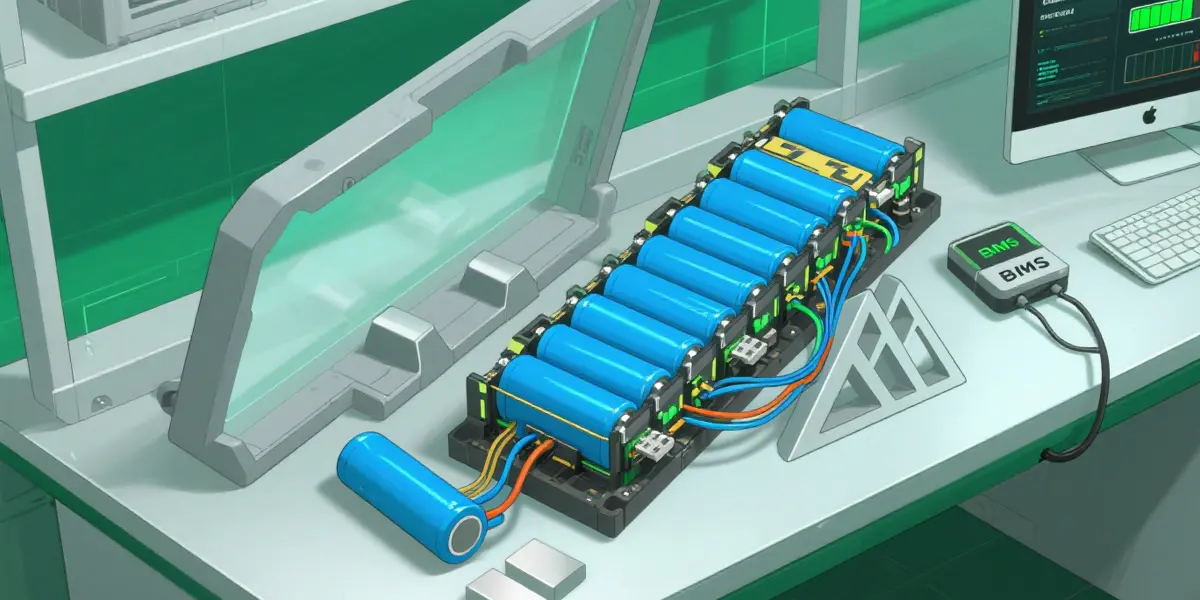
1, Lithium battery pack components
Lithium battery cells:
The most basic energy unit, commonly found in cylindrical (e.g. 18650, 21700), square (hard case) and soft pack (polymer) cells.
The cell is the core part of lithium battery Pack, providing electrical energy. Commonly, there are lithium cobalt, lithium iron phosphate, lithium ternary and other different systems of battery cells, each with its own characteristics, such as lithium cobalt battery with high energy density, but relatively poor safety; lithium iron phosphate battery with good safety, but lower energy density. Different types of battery cells have different voltage, capacity, life, thermal stability and other characteristics.
Battery Management System (BMS):
- Voltage/current/temperature monitoring: real-time monitoring of the status of each battery cell.
- Equalisation management: Eliminate capacity differences between cells through passive or active equalisation.
- Protection functions: overcharge protection, overdischarge protection, overcurrent protection, overheat protection, etc.
- SOC/SOH estimation: Estimate the remaining battery capacity (SOC) and state of health (SOH).
Structural components and shell:
- Mechanical structure: including battery shell, bracket, connecting piece, fixing piece, insulating material, etc., used to fix and protect the electric cell and other components, and at the same time play the role of electrical connection and mechanical support.
- Shell materials: aluminium alloy, engineering plastics or composite materials, which need to meet the requirements of strength, light weight and heat dissipation.
- Thermal management design: heat sinks, liquid cooling piping or ducts to control the operating temperature of lithium battery (generally 20~40℃).
- Connectors and wiring harnesses: to achieve the connection between the lithium battery module and external equipment, power supply, controller.
Electrical Connection
- Series Connection Configuration: Connect the positive and negative terminals of multiple cells in sequence, so as to increase the total voltage of the battery pack, the total voltage is equal to the sum of the voltage of each cell, while the capacity remains unchanged. For example, 16S lithium battery (LiFePo4) series connection to increase the voltage represents 16 cells in series (e.g. 3.2V x 16 = 51.2V).
- Parallel Configuration: Connecting the positive pole of multiple cells to the positive pole and the negative pole to the negative pole can increase the total capacity of the battery pack, and the total capacity is equal to the sum of the capacity of each cell while the voltage remains unchanged. For example, by connecting five 3.2V, 20Ah cells in parallel, the voltage of the battery pack will be 3.2V and the capacity will be 60Ah.
- Connection method: laser welding, nickel sheet welding or bolt connection, low internal resistance and high reliability are required.
2, Introduction to the main parameters of lithium battery Pack
Voltage: The output voltage of a battery pack is determined by the number of cells connected in series and the voltage of a single cell. Different application scenarios require different voltage levels, for example, mobile phones generally use 3.7V or 4.2V lithium batteries, while electric vehicles usually use high-voltage battery packs with several hundred volts.
Capacity: It indicates the amount of charge that a battery can store, and the unit is Ah (ampere-hour). Capacity determines how long a battery can continue to supply power after a single charge.
Energy: The total amount of electrical energy in Wh (watt-hours) that a battery pack is capable of releasing. Energy is equal to the voltage multiplied by the capacity, for example, a 12V, 100Ah battery pack, its energy is 12V × 100Ah = 1200Wh = 1.2kWh.
Power: The amount of electrical energy that a battery pack can output per unit of time, in W (watts) or kW (kilowatts). The amount of power affects the size of the load that the battery pack can drive and the operational performance of the equipment.
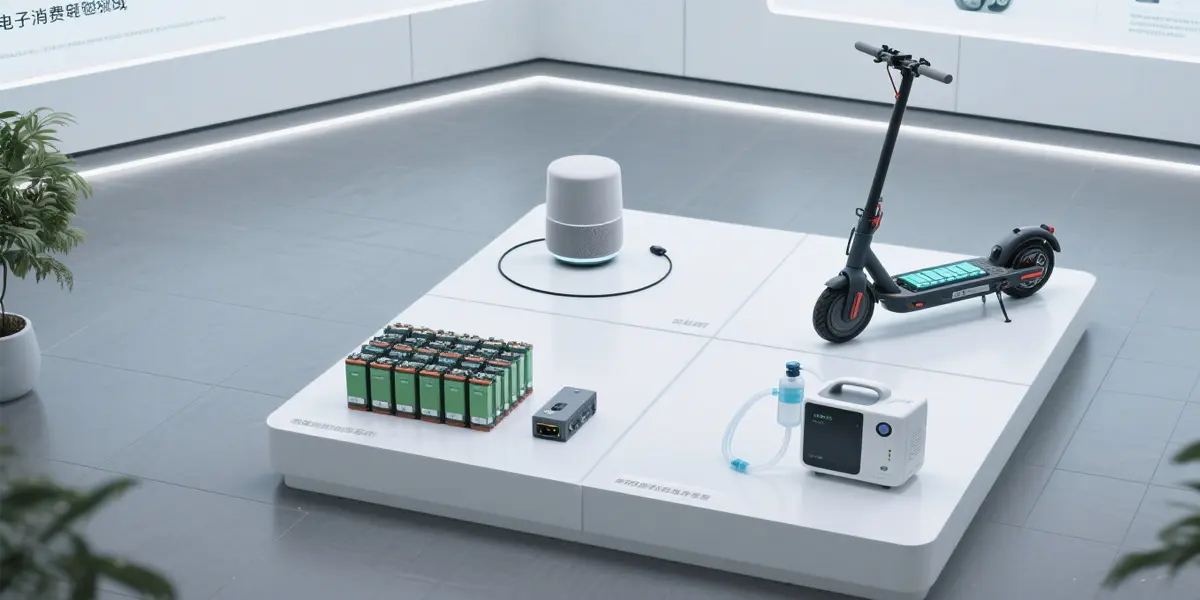
Application Scenarios of Lithium Battery Pack
- Consumer Electronics: Portable electronic devices: such as smart phones, tablets, laptops, etc., these devices need Li-ion battery Pack to provide high energy density, small size, lightweight power supply, in order to meet the portability of the device and the demand for long endurance.
- Household electronic devices: like cordless hoovers, electric shavers, electric toothbrushes, etc., Li-ion battery packs provide flexible power solutions for these devices, freeing them from the constraints of power cords and making them more convenient to use.
- In the field of electric transport: pure electric vehicles, hybrid electric vehicles, electric bicycles, electric motorbikes, electric tricycles, golf carts, electric forklifts and other applications, Li-ion battery packs have become the mainstream with their lightweight and high energy density.
- Energy storage: Renewable energy storage, power grid storage and home energy storage. Li-ion battery packs are used to store excess power.
- Medical field: pacemakers, defibrillators, portable ventilators, mobile medical equipment, etc. Li-ion battery packs provide reliable power supply for these devices, which require high safety, long life and stable performance to ensure the normal operation of medical equipment and patient safety.
Lithium battery Pack future development trend
Green and sustainable development: In the production process, low energy consumption and low emission production equipment and processes will be adopted, the treatment and recovery of production waste will be strengthened, and the recycling of resources will be promoted. At the same time, focusing on the sustainability of battery materials, from the procurement of raw materials to the recycling of batteries, will follow the principle of environmental protection, to reduce the impact on the environment.
Customised and Flexible Production: With the diversification of market demand, lithium battery Pack production will develop in the direction of customisation. Through modular design, the production line can quickly adapt to the demand for battery packs with different core types, specifications and structures, providing customers with personalised product solutions to meet the needs of various specific application scenarios.
Significant growth in the energy storage market: With the rapid development of renewable energy, the demand for energy storage systems continues to increase. As the core component of the energy storage system, lithium battery pack has a broad application prospect in the fields of grid energy storage, home energy storage, industrial energy storage, etc., which will promote the further expansion of lithium battery pack market scale.
Strengthened international cooperation: As the integration of global market accelerates, enterprises from various countries will strengthen international cooperation and exchange, jointly carry out technology research and development, share resources and markets, promote technological innovation and industrial upgrading of lithium battery pack production lines, and enhance the overall development level of the global lithium battery pack industry.


