

2025-04-18
Golf carts and sightseeing vehicles have found widespread application across golf courses, hotels, resorts, airports, factories and other settings. As their core power source, batteries directly determine range, performance, lifespan and operational costs. Faced with batteries of varying brands, capacities, and cell materials, how does one select the most suitable golf cart battery? This guide offers a comprehensive, multi-faceted analysis of golf cart batteries and presents LEAD-WIN's Top 10 best LiFePO₄ batteries for golf carts.

Lead-acid and lithium-ion batteries can meet almost all golf cart needs; choose the appropriate battery type based on the usage scenario. Modern golf cart batteries are mainly divided into lead-acid batteries (Flooded/AGM/GEL) and lithium iron phosphate batteries. Each type of battery has its own advantages and disadvantages in terms of cost, weight, charging time, and maintenance; the choice should be based on lifespan and usage scenario.
Quick comparison
|
|
Lead-Acid Battery |
LiFePo4 Battery |
|
Price |
Lower |
High |
|
Maintenance requirements |
Maintenance required |
No maintenance required |
|
Cycle life |
300-500 cycles |
At least 2000 cycles |
|
Weight |
Very heavy |
It weighs 1/3 of a lead-acid battery. |
|
Charging speed |
Slow, 8-10 hours to fully charge |
Supports fast charging, reaching 80% in 1 hour. |
|
Use cases |
Limited budget, regular maintenance |
Frequent use, long-term investment, pursuit of performance |
Lead-acid batteries are common and economical, offering low prices but relatively high maintenance costs. Due to their low price, they are often used as entry-level golf cart batteries. Maintenance is essential. You will need to check the electrolyte level, keep the terminals clean, and ensure the battery compartment is ventilated to control gas leaks. Under moderate cycling conditions, their typical lifespan is approximately 3-5 years; charging from about 50% to full takes approximately 8-12 hours.
Lithium iron phosphate (LiFePO4) batteries maximize the usable capacity of golf carts, reduce weight, and shorten the charging window. Lithium batteries are lightweight, maintenance-free, and have a built-in battery management system (BMS) to protect against over/under voltage and short circuits. Typical operating temperature range is approximately -4°F to 140°F (-20°C to 60°C); a heater may be required for charging at low temperatures. A full charge from 20% to 80% typically takes 1-2 hours using a compatible charger. Initial costs are the highest; wiring and charging equipment must be compatible.
Commercial vehicle fleets require a unified voltage standard to avoid component confusion. The core configurations are as follows:
36V System: Only suitable for small golf carts and sightseeing vehicles;
48V System: Mainstream for commercial use (suitable for golf courses/resorts/logistics). Recommended configuration:
AGM: 6×8V/200-225Ah in series (range 20-30 miles/trip);
LiFePO4: 48V/100-200Ah (range 30-50 miles/trip, 150-200Ah for heavy loads);
60V/72V System: For high-end heavy-duty logistics vehicles/hilly golf courses, select 60V/72V 100-200Ah LiFePO4.
Choose the appropriate ampere-hour (Ah) rating based on your needs, then select the appropriate voltage and battery size. The capacity is determined by the ampere-hour rating of the golf cart battery, but the golf cart battery compartment determines the maximum size you can install. When connecting battery packs in parallel, keep the cables short and of equal length. Refer to the golf cart battery size chart to avoid mismatches and note the weight limits (in pounds) to protect the battery compartment.

LEAD-WIN specializes in providing high-quality lithium iron phosphate (LiFePO4) batteries for electric tricycles and golf carts, using top-tier brand Grade A cells. These batteries utilize LiFePO4 technology, offering significant advantages such as high safety, long lifespan, high power output, and environmental friendliness, effectively replacing traditional lead-acid batteries. Below are LEAD-WIN's Top 10 most popular LiFePO4 batteries for electric tricycles and golf carts, sorted by voltage system.
This is a standard 36V system upgrade battery with a total energy of 3.6kWh and a built-in intelligent BMS. Designed specifically for traditional 36V golf carts using six 6V lead-acid batteries, it's a perfect direct replacement solution.

The 48V 50Ah (55Ah) LiFePo4 battery is a compact, economical entry-level 48V battery with an energy of approximately 2.816kWh and dimensions of 520*260*200mm. It is suitable for scenarios with light loads or infrequent use.

The 48V 100Ah LiFePo4 battery is currently the most mainstream and best-selling golf cart battery model on the market, with a total energy of 5.12kWh, a cycle life of 4000+ cycles, and a basic 5-year warranty. It is specifically designed to replace modern 48V golf carts with four 12V lead-acid batteries.

This is an ultra-high capacity 48V battery with a total energy of up to 9.6kWh and dimensions of 1092mm*190mm*300mm. It is designed for users with extreme range requirements, such as large golf courses, multi-shift operations, or golf carts or electric tricycles requiring heavy loads.

This is a battery focused on performance and power, with a total energy of 4.608kWh, customized dimensions (standard 520×330×150mm), a weight of approximately 38.1kg, and a cycle life of 3500+ cycles. It is suitable for golf carts or small, low-speed vehicles that require higher speed and acceleration performance.

This represents an optimal choice for balancing performance and range within a 60V system. With a nominal voltage of 64V and a rated capacity of 90Ah, it utilises CATL Grade A cells to deliver 5.76kWh of energy. This provides extended range and enhanced power output, making it suitable for vehicle modifications prioritising both speed and load capacity, or for high-end models.
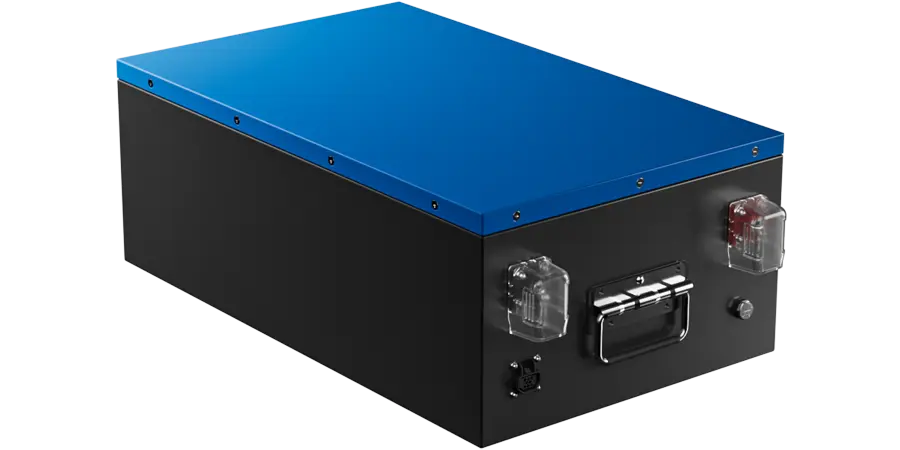
This 60V 100Ah LiFePO4 battery utilises CATL Grade A cells, delivering 6656Wh of energy. Measuring 640×330×160mm and weighing approximately 55kg, it boasts a cycle life exceeding 4000 cycles. Combining the power of high voltage with the endurance of a 100Ah capacity, it offers comprehensive performance.

The 72V 100Ah LiFePO₄ battery is a professional-grade high-voltage battery system with a total energy capacity of 7.987kWh. Featuring CATL Grade A cells, it delivers a continuous discharge current of 100A, weighs 68kg, and measures 680×400×160mm. This system is ideal for customers demanding both high power output and extended range.

This high-capacity 72V 125Ah LiFePO₄ battery pack is specifically engineered for heavy-duty/long-range applications, delivering 9600Wh of energy with a continuous discharge current of 200A. It is ideal for high-load vehicles requiring round-the-clock operation or extended-range connectivity.

LEAD-WIN's 72V 200Ah LiFePO₄ battery boasts an exceptionally high capacity of 15.36kWh, weighing approximately 110 kilograms. It offers high safety, an exceptionally long service life, robust power delivery, and outstanding environmental adaptability. It is specifically engineered for applications demanding the most stringent requirements for range and power performance.

By integrating the core characteristics of our Top 10 LiFePO4 batteries for golf carts, as outlined above, with the fundamental principle that ‘appropriate selection = matching voltage / capacity / application scenario’, employing suitable golf cart batteries—particularly LiFePO4 batteries precisely tailored to specific requirements—delivers significant advantages across four key dimensions: economic cost, performance experience, safety assurance, and operational efficiency.
Suitable LiFePO4 batteries for golf carts (such as 48V 100Ah or 72V 125Ah) boast a cycle life of 2,000 to 6,000 cycles and a service life of 8 to 10 years, representing 3 to 4 times that of lead-acid batteries. In commercial applications, lead-acid batteries for golf carts typically require replacement every 2-3 years, necessitating two replacements within five years. Conversely, suitable LiFePO4 batteries require no replacement for five years, yielding savings of 50%-70% in replacement costs alone.
LiFePO4 batteries tailored to specific applications require no water topping up or equalisation charging (e.g., a 36V 100Ah unit fitted to older golf carts eliminates labour costs through its maintenance-free nature), with annual maintenance costs averaging just $5–10 – substantially lower than the $50–80/year for lead-acid batteries. Furthermore, with energy conversion efficiency exceeding 95%, they save 15-20% annually on charging costs compared to lead-acid (70-85%), achieving payback within 2-3 years in high-frequency usage scenarios.
First, select an appropriately sized battery (e.g., 48V 50Ah for short journeys, 72V 200Ah for longer trips) to precisely meet daily mileage requirements:
- Personal leisure use (15-25 miles daily): Opt for 48V 50Ah for perfectly adequate range without waste; For commercial heavy-duty applications (50-100 miles daily), opt for 48V 200Ah or 72V 125Ah to cover full-day usage on a single charge without mid-journey top-ups.
Batteries matched to voltage/capacity, vehicle type, and usage scenarios (e.g., 60V 90Ah or 72V 100Ah for hilly terrain). Voltage drop during discharge ≤10%, ensuring no power loss during inclines or heavy loads:
- 60V series delivers 25% faster acceleration than 48V models. while the 72V series supports 800kg-1.5 tonne loads, preventing power shortages under heavy loads.
Golf cart LiFePO₄ batteries weigh merely 30-40% of equivalent lead-acid units. This reduced vehicle mass enhances agility, making turning and hill-climbing less strenuous. Furthermore, the plug-and-play design (requiring no circuit modifications) enables single-person installation, saving both time and labour costs.
Suitable batteries (e.g., 48V 200Ah with heating function for cold regions; IP67 waterproof 72V 200Ah for high-temperature areas) cover operating temperatures from -20°C to 60°C. Low-temperature capacity retention ≥80%, with no risk of swelling at high temperatures. Prevents winter range halving and summer short-circuit failures caused by temperature intolerance, particularly suited for golf carts with high outdoor usage frequency.
Precisely matched LiFePO4 batteries incorporate intelligent BMS (e.g., 100A-300A for different motor power ratings), featuring quadruple safeguards against overcharging, over-discharging, short-circuiting, and overheating; With IP54-IP67 waterproof and dustproof ratings (e.g., 72V 200Ah achieves IP67), it adapts to rainy courses and muddy terrain, preventing leakage or fire risks from inadequate battery protection to safeguard both vehicle and personnel.
The battery voltage precisely matches the original vehicle motor (e.g., 36V 100Ah for older 36V golf carts, 72V 100Ah for heavy-duty 72V vehicles). This eliminates controller or motor burnout from excessive voltage and prevents frequent shutdowns due to insufficient voltage, thereby extending the vehicle's overall service life.
Selecting suitable fast-charging batteries for commercial applications (e.g., 60V 100Ah models supporting 80% charge in 2 hours) delivers 60%-70% greater charging efficiency than lead-acid batteries (8-10 hours to full charge).
Mid-to-high-end compatible batteries (e.g., 48V 100Ah LiFePO₄ batteries, 72V lithium battery series) enable real-time monitoring of charge level, temperature, and fault status. Commercial fleets (20+ units) can be centrally managed with advance fault alerts, preventing vehicle downtime due to battery issues and boosting operational efficiency by 50%.
A dependable golf cart battery partner ensures product quality and differentiation, enhancing customer satisfaction through proven safety performance, precise specifications and stable supply. Audited partners further accelerate technological innovation and product iteration.
Whether a 72V golf cart battery is superior to a 48V system depends on specific requirements and vehicle configuration. In terms of performance, a 72V system operates at a lower working current for the same power output, resulting in reduced line losses and heat generation. Consequently, it typically delivers higher motor efficiency, greater speed, and superior hill-climbing capability, making it particularly suitable for larger, heavier-duty vehicles or those requiring high-speed performance. However, “better” is contingent upon the vehicle's core components—such as the motor and controller—being specifically designed and matched for 72V operation. Direct retrofitting is not only ineffective but may also damage the equipment. For standard 48V golf carts, the matched 48V battery represents an optimal balance of performance, cost, and range. The 72V system, conversely, signifies a more specialised, high-performance solution, albeit with increased cost and complexity. Consequently, it cannot be simplistically stated that 72V is inherently superior; the critical factor is whether it aligns with your vehicle platform and intended usage objectives.
It is absolutely worth it. For frequent users, this represents a highly profitable and prudent investment. Although the initial purchase cost of lithium batteries is significantly higher than lead-acid batteries, the substantial advantages they offer fully offset the price difference:
Extremely lightweight, significantly enhancing range and vehicle performance;
Extremely fast charging, requiring only 2-4 hours to fully charge;
Most crucially, they require virtually no maintenance and boast a lifespan of 8-15 years – over three times that of lead-acid batteries. Over the long term, their average annual cost is actually lower, while delivering consistently robust power throughout, eliminating range anxiety entirely. Therefore, budget permitting, upgrading to a lithium battery is the optimal choice for enhancing your golf cart experience.
After replacing the battery in a golf cart, a noticeable reduction in speed is typically not due to the quality of the new battery itself, but more likely stems from an incompatibility between the old and new battery types or voltages. For instance, if a vehicle originally designed for a 48V system is mistakenly fitted with a lower-voltage 36V battery, the resulting power output will naturally be insufficient. Furthermore, even with correct voltage, if the new battery is a lead-acid unit with a lower discharge rate (or an incompatible lithium battery), it may fail to deliver the instantaneous current surge required during high-power demands, resulting in sluggish acceleration. Finally, loose wiring or poor connections during installation can increase resistance, impairing current transmission efficiency and consequently limiting the vehicle's speed.


