

2025-04-18
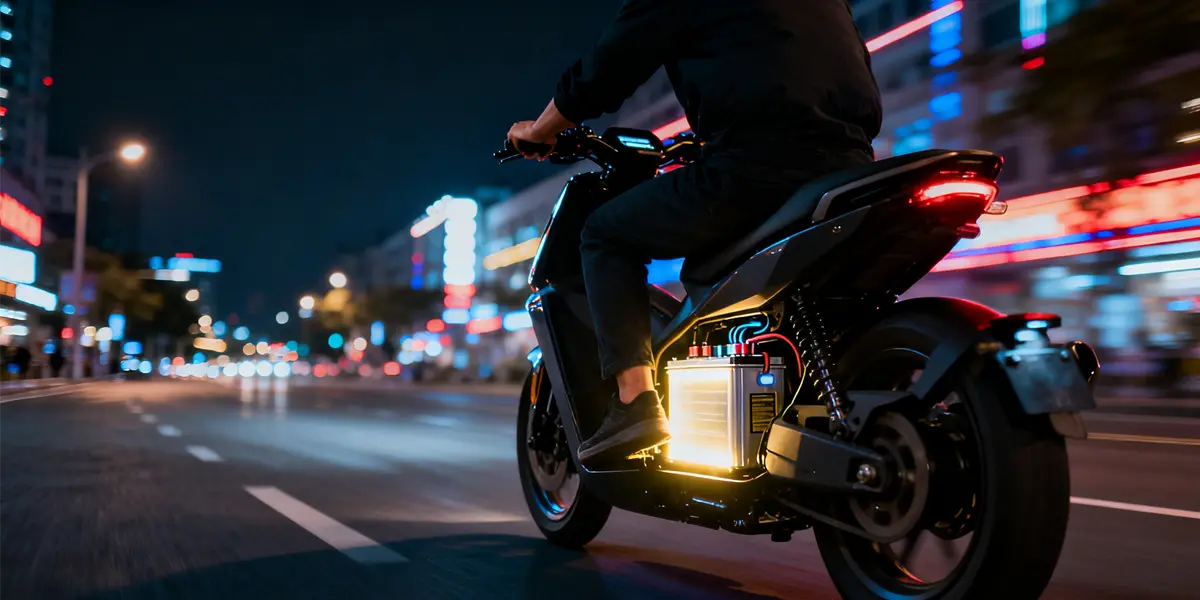
The mainstream lithium-ion battery types currently are lithium iron phosphate (LFP) and ternary lithium (NCM/NCA), which exhibit significant differences in performance and applicable scenarios:
Featuring exceptional safety (thermal runaway temperature >800°C) and ultra-long cycle life (over 3,000 cycles), it is ideal for commercial operations requiring frequent charging and discharging, such as passenger services in Kenya. With an energy density of approximately 160Wh/kg, the 72V 60Ah lithium battery pack delivers a range exceeding 120 kilometers, fully meeting riders' average daily commuting needs. Additionally, lithium iron phosphate batteries demonstrate stable performance in high-temperature environments (-20°C to 60°C) and meet IP67 protection certification, effectively withstanding dusty and rainy climates.
Energy density reaches 200-300Wh/kg with outstanding low-temperature performance (88% capacity retention at -20°C), making it ideal for long-distance riding demanding high range and power. However, note its poor thermal stability (thermal runaway temperature around 200°C), requiring reliance on high-performance BMS systems for safety assurance.
Selection Recommendations: Prioritize LFP batteries for high-temperature regions or commercial operations. For low-temperature environments or extended range needs, consider ternary lithium batteries. Always verify cell brands (e.g., CATL, BYD) and origin. Additionally, our electric motorcycle lithium battery product line employs leading processes and technologies, achieving ultimate safety and cycle life.
Battery performance directly determines the power and range of electric motorcycles.
High Energy Density: Higher energy density means the battery can store more electricity within the same volume and weight. This directly translates to longer range and lighter vehicle weight, enhancing the riding experience.
Voltage and Capacity Matching:
Voltage (V) must precisely match your electric motorcycle motor controller's requirements (common examples include 60V and 72V). Voltage mismatch may cause the vehicle to malfunction or even sustain damage.
Capacity (Ah) is akin to the size of a fuel tank, directly determining the range. For instance, a 72V 60Ah lithium battery can achieve a minimum range of 120 kilometers (depending on vehicle weight and riding conditions).
BMS is the core component ensuring battery safety and lifespan, requiring attention to the following functions:
Real-time Monitoring:
High-precision acquisition of cell voltage (accuracy ±1mV), current (accuracy ±1%), and temperature (accuracy ±1°C), with precise estimation of State of Charge (SOC) and State of Health (SOH) via Kalman filter algorithms.
Multi-Layer Protection:
Includes overcharge protection, over-discharge protection, overcurrent protection, and overtemperature protection (activates cooling when operating temperature exceeds 60°C).
Balancing Management:
Utilizes dynamic balancing technologies (e.g., active dissipation) to equalize cell voltage differences, preventing capacity degradation caused by the “bottleneck effect.”
Smart Compatibility:
Supports wide input voltage (100-240V) and OTA updates, adapting to regional grid environments and future technology iterations.
High-Quality Battery Cells:
The battery cell is the “heart” of the battery. Selecting cells from reputable brands with stringent quality standards is fundamental to eliminating safety hazards. Lithium iron phosphate (LiFePO4) material offers superior high-temperature stability.
Battery longevity directly determines your long-term usage costs.
Cycle Life: This refers to the number of complete charge-discharge cycles a battery can undergo while retaining 80% of its initial capacity. Higher cycle counts indicate longer battery life. A lithium battery capable of over 2,000 cycles may last several years longer than a lead-acid battery limited to just 500 cycles.
Warranty Policy: The warranty period and terms offered by the manufacturer reflect their confidence in the product. A warranty lasting 3 years or longer provides peace of mind.
Lithium battery performance is significantly affected by environmental factors such as temperature, humidity, and vibration. Pay attention to the following indicators:
Temperature Range:
Lithium iron phosphate batteries are recommended for operation between -20°C and 60°C, with a capacity decay rate <5% per year at high temperatures. Ternary lithium batteries maintain up to 88% capacity retention at -20°C, but their lifespan shortens more noticeably at high temperatures.
Protection Rating:
Select battery packs with an IP6x rating or higher.
Vibration and Shock Resistance:
Must pass GB/T 31467.3 (Vibration Testing for Electric Vehicle Batteries) to ensure structural stability on rough terrain. For example, during rural road testing in Kenya, a battery pack maintained >98% capacity retention after 2 hours of 50Hz vibration.
Selecting an experienced lithium battery manufacturer is key to ensuring long-term stable supply and after-sales support.
Professional manufacturers should be able to provide:
Reliable suppliers not only guarantee quality but also assist customers in completing product certification and EV compatibility testing, thereby reducing future risks.
Beyond universal factors, the climate, regulations, and infrastructure in your region are also crucial.
High Temperature and Humidity Adaptability: These regions experience year-round high temperatures and humidity. Batteries must feature excellent heat dissipation design and robust thermal management systems. Sealed casings are essential to prevent moisture and rainwater from corroding internal circuits, causing short circuits and corrosion. Lithium iron phosphate batteries are highly recommended for these areas due to their superior thermal stability.
Road Conditions and Shock Resistance: Some areas feature complex road conditions. Batteries require a robust casing and effective shock-absorbing design to withstand impacts from rough terrain, preventing internal cell displacement and solder joint loosening.
Accessibility of After-Sales Network: Selecting brands with established local after-sales service centers or authorized distributors is crucial. This ensures prompt repair or replacement when battery issues arise, avoiding lengthy international logistics delays.
Regulatory and Certification Compliance: The European market enforces extremely stringent product safety regulations. When purchasing, ensure batteries meet mandatory certifications such as CE and RoHS. For high-end models, also verify compliance with requirements like UN38.3 (transport safety standards). Products lacking these certifications are not only illegal but pose significant safety risks.
Charging Infrastructure Compatibility: With the proliferation of public charging stations, if your vehicle supports it, verify that the battery is compatible with local charging standards and protocols.
Purchasing lithium batteries for electric motorcycles is not merely a choice of performance, but an investment in safety, durability, and brand reputation. If you are seeking high-performance electric motorcycle battery solutions for markets in Africa, Southeast Asia, or Europe, LiFePO4 battery systems such as 72V 60Ah and 60V 45Ah are ideal choices.
As a professional lithium battery manufacturer, LEAD-WIN consistently upholds the principle of “Safety First, Quality Foremost.” We are committed to providing you with high-quality, highly safe lithium battery products crafted from top-tier cells, intelligent BMS, and exquisite craftsmanship. Coupled with comprehensive after-sales service, we ensure every journey you take is worry-free.


