

2025-04-18
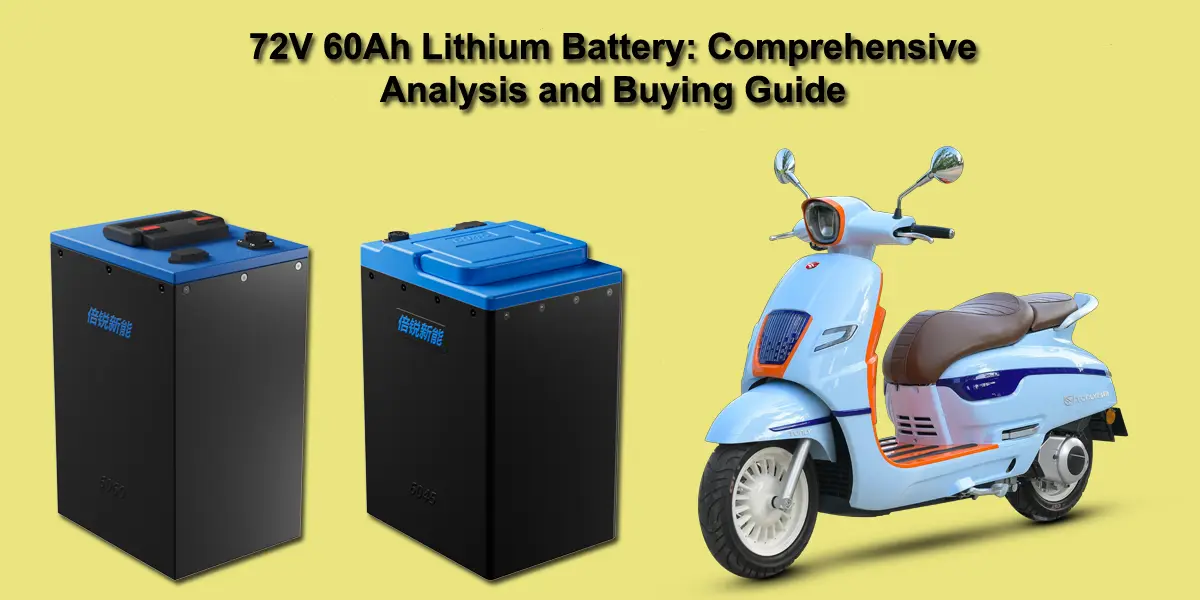
The 72V 60Ah lithium battery, simply put, is a lithium-ion battery pack with a voltage of 72V and a capacity of 60Ah. It serves as the preferred power source for high-end electric motorcycles, electric tricycles, mobility scooters, and other high-power electric vehicles.
Voltage (72V): Determines the vehicle's power intensity and speed. The 72V high-voltage platform delivers stronger acceleration and higher top speeds compared to common 48V or 60V batteries.
Capacity (60Ah): Represents the amount of electricity the battery can store. Higher capacity translates to longer range, directly influencing an electric vehicle's endurance. 60Ah represents an exceptionally large capacity, enabling an extended single-charge driving range.
Energy Density: Measures electrical energy per unit weight/volume. Typically, a ternary lithium 72V 60Ah battery weighs approximately 35-40kg, while a lithium iron phosphate battery weighs about 45-50kg. Higher energy density means lighter batteries for the same capacity.
Cycle Life: The number of charge/discharge cycles before battery capacity degrades to below 80%. High-quality products can achieve 800-1200 cycles (equivalent to 2-3 years of daily use at one charge per day).
Discharge Rate (C-Rate): Indicates discharge speed. Common discharge rates for 72V 60Ah batteries range from 1C to 2C (LEAD-WIN's 72V 60Ah lithium battery supports a 3C discharge rate). Higher rates deliver stronger instantaneous power (e.g., more forceful during hill climbs or acceleration).
In our article “LEAD-WIN Launches 72V 60Ah Lithium Battery Based on CATL Cells,” we introduced the advantages and features of the 72V 60Ah lithium battery. Here, we will briefly outline the characteristics of this 72V 60Ah lithium battery.
When selecting a 72V 60Ah lithium battery, price alone is not the only factor to consider. The following points are crucial:
72V 60Ah lithium batteries primarily consist of ternary lithium and lithium iron phosphate cells, each suited for distinct applications. Incorrect selection may result in wasted performance or safety risks.
Ternary Lithium Batteries: Ideal for cold regions and users prioritizing portability. Advantages include high energy density (lightweight) and excellent low-temperature performance (operates normally at -20°C). Disadvantages include poor high-temperature tolerance (risk of ignition around 200°C), requiring avoidance of direct sunlight or overcharging.
Lithium Iron Phosphate Batteries: Suitable for high-temperature regions and safety-conscious users. Advantages include high-temperature resistance (non-flammable at 600°C) and extended cycle life (up to 1200 cycles). Disadvantages include poor low-temperature performance (significant capacity degradation below -10°C) and slightly heavier weight.
The Battery Management System (BMS) is the "brain" of a lithium battery, responsible for monitoring cell voltage, current, and temperature to prevent overcharging, over-discharging, short circuits, and overheating. Its quality directly determines battery safety and durability.
A high-quality BMS features multiple protections, such as overcharge protection (power cut-off when voltage exceeds 78V), over-discharge protection (power cut-off when voltage drops below 60V), and over-temperature protection (power cut-off when temperature exceeds 60℃). It also has a balancing function (balancing the voltage of each cell to prevent individual cells from degrading too quickly).
Communication interfaces include UART/RS485/CAN bus, facilitating communication with the vehicle controller and displaying accurate battery level information.
Note: Low-priced products may use a "simplified BMS" that only supports basic short-circuit protection. Long-term use can easily lead to cell imbalance and shorten battery life.
Welding Process: Laser welding is preferred for battery packs, resulting in stronger connections, lower resistance, and higher safety.
Support and Fixing: Cells should be neatly arranged with reliable insulating supports between them. The overall structure should be compact and shock-resistant.
Manufacturer Strength: Choose lithium battery manufacturers with independent cell assembly capabilities, export experience, and comprehensive after-sales service.
Warranty Period: Prioritize brands offering "cell warranty of 2 years or more" and "complete battery pack warranty of 3 years or more".
|
Vehicle motor power |
Average speed |
Estimated driving range |
|
1000W |
40km/h |
More than 180 kilometers |
|
1500W |
50km/h |
Approximately 130-150 kilometers |
|
2000W |
60km/h |
Approximately 120 kilometers |
|
3000W |
70km/h |
Approximately 80-110 kilometers |
Note: In low temperatures during winter, the activity of lithium batteries decreases, resulting in a 20%-30% reduction in battery life, which is normal.
Proper use and maintenance can extend the lifespan of a 72V 60Ah lithium battery by more than 30%, the key being "avoiding damage to the battery cells."
Charge when the battery level is 20%-30%, and disconnect the power promptly after it is fully charged (avoid charging for more than 8 hours, especially overnight).
Use the original brand-name charger. Mixing chargers with different voltages/currents can lead to overcharging or incomplete charging (e.g., a 72V charger cannot be used with a 60V battery).
When not in use for extended periods (e.g., during winter), charge the battery to 50%-60% and store in a dry environment between 0-25℃. Avoid direct sunlight, rain, or proximity to heat sources (such as radiators or stoves).
Recharge the battery every 1-2 months to prevent irreversible degradation due to cell depletion.
Reduce frequent rapid acceleration and braking, and avoid prolonged uphill climbing (e.g., uphill climbing time should not exceed 5 minutes when under heavy load) to prevent high-current discharge of the battery and damage to the cells.
Regularly check battery connection cables for looseness and oxidation. If poor contact is found, clean or replace the terminals promptly.
When cleaning the battery surface, wipe with a dry or damp cloth. Avoid direct water rinsing. (Even if the battery pack is waterproof, prolonged exposure to water can still corrode the battery management system.)
If water accidentally gets into the battery, immediately disconnect the power cord, allow it to dry, and have it inspected by a professional to confirm it's fault-free before use.
Every 3-6 months, have a professional inspect the battery cell voltage balance. If the voltage of a cell differs by more than 0.3V from the others, repair it immediately to prevent excessive degradation of individual cells and affect the entire battery pack.
A: This is a complex issue, primarily depending on:
A: They can be replaced if the voltage is the same, but two points need to be noted: First, pay attention to the size of the battery compartment. Lithium batteries are lightweight and need to be fixed in place to avoid shaking. Second, lithium battery chargers are different from lead-acid battery chargers and must be replaced with a 72V lithium battery-specific charger.
Yes. The LEAD-WIN 72V60Ah lithium battery features modularity and communication interfaces, making it compatible with battery swapping cabinets and intelligent monitoring systems.
Prices vary greatly depending on the battery cell brand, BMS solution, manufacturing process, and brand premium. They typically range from $400 to $800. Do not be tempted by extremely low prices; products with excessively low prices may have cut corners on core components.
With its powerful performance, long range, and reliable safety, the 72V 60Ah lithium battery has become the preferred solution for high-power applications such as electric motorcycles and electric tricycles. When purchasing, it's essential to first clarify your intended use case (region, load capacity, and range requirements), then select based on four key dimensions: cell type, BMS quality, brand qualifications, and after-sales service. Proper use and maintenance will also extend its lifespan. Whether you are a dealer, electric motorcycle manufacturer, or individual user, choosing a high-quality 72V 60Ah lithium battery is a crucial step in improving vehicle performance and fuel economy.


